
The Potential of Mangrove Forests in Preserving Blue Carbon
The Potential of Mangrove Forests in Preserving Blue Carbon has become a major international concern because it is directly related to global carbon emission reduction efforts. Various studies have proven that mangrove ecosystems possess an extraordinary capacity to absorb carbon dioxide from the atmosphere and store it within coastal soils for decades or even centuries. This condition makes mangroves one of the most effective natural ecosystems in supporting climate change mitigation programs. In addition to absorbing carbon, mangroves also maintain the balance between marine & terrestrial ecosystems, providing broad ecological benefits for human life.
In Indonesia, mangrove forests hold strategic value because the country is home to one of the largest mangrove ecosystems in the world. Many coastal communities depend on mangrove ecosystems for their economic livelihoods through fisheries, nature tourism, and non-timber forest products. If mangrove areas are damaged due to human activities, environmental & economic losses may occur in the long term. Therefore, mangrove conservation is not only related to environmental preservation but also to the sustainability of coastal communities. Southwest Papua Carbon Project serves as a professional conservation service provider dedicated to helping various stakeholders preserve mangrove ecosystems through modern, educational, & sustainable approaches.
Also read articles : “Blue Carbon Conservation Based on the Wisdom Papuan Women“
The Potential of Mangrove Forests in Preserving Blue Carbon to Reduce Climate Change
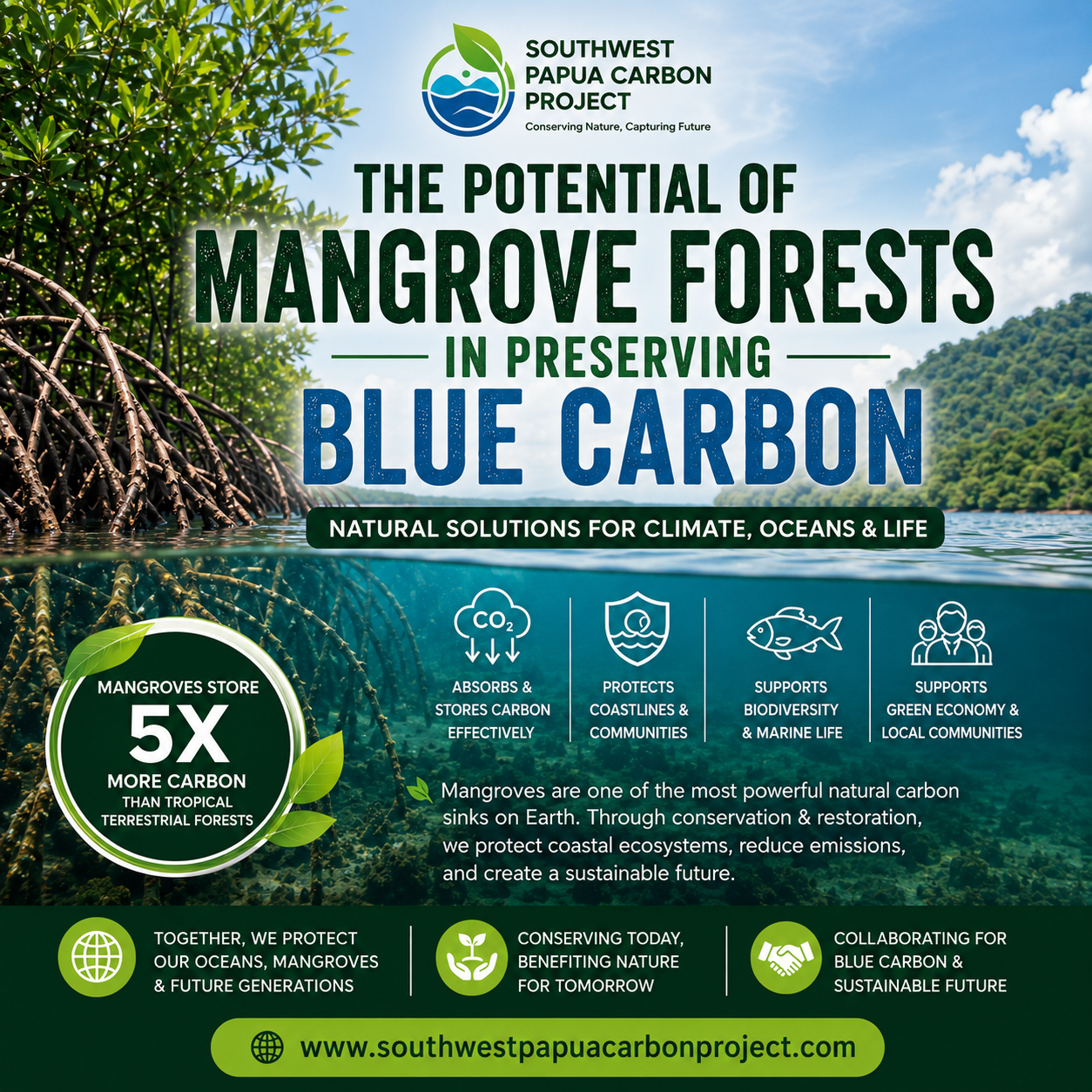
The Potential of Mangrove Forests in Preserving Blue Carbon is extremely significant because mangroves are capable of storing up to five times more carbon than tropical terrestrial forests. Carbon stored within mangrove ecosystems can remain preserved for hundreds of years as long as environmental conditions remain stable. Mangroves absorb carbon dioxide from the atmosphere through photosynthesis and store it in organic-rich coastal sediments. This is why mangrove ecosystems are often referred to as highly effective natural carbon sinks.
Besides helping reduce global warming impacts, mangroves also support the sustainability of habitats for fish, crabs, shrimp, and various marine species. Southwest Papua Carbon Project offers mangrove rehabilitation services, coastal area mapping, conservation education, and environmentally based CSR programs to support successful blue carbon management in an optimal manner.
Also read articles : “Blue Carbon Conservation Based on the Wisdom Papuan Women“
What is Blue Carbon & Its Relationship with the Potential of Mangrove Forests in Preserving Blue Carbon
What is Blue Carbon is a common question when discussing climate change & coastal conservation. Blue carbon refers to carbon stored within coastal ecosystems such as mangroves, seagrass meadows, and salt marshes. These ecosystems naturally absorb carbon from the atmosphere and store it over very long periods. The Potential of Mangrove Forests in Preserving Blue Carbon becomes increasingly important because mangroves are considered the largest carbon storage ecosystem among coastal habitats.
Mangroves not only store carbon above ground but also within deep sediment layers. As a result, mangrove destruction can release massive amounts of carbon emissions back into the atmosphere. Southwest Papua Carbon Project assists companies, institutions, and communities in implementing effective mangrove restoration programs, ranging from site surveys to long-term conservation assistance.
The Benefits of Blue Carbon in Ecosystems for Human Life & Nature
The Benefits of Blue Carbon in Ecosystems are extensive because they are not only related to carbon absorption but also support overall environmental balance. The Potential of Mangrove Forests in Preserving Blue Carbon provides direct benefits for coastal communities by maintaining water quality, preventing coastal erosion, reducing tidal flooding risks, and increasing fishery productivity.
Mangroves also serve as important habitats for birds, fish, and other marine organisms. Furthermore, blue carbon ecosystems support the development of green economies through ecotourism, environmental research, and international carbon trading programs. Southwest Papua Carbon Project provides consultation services and blue carbon project development to help organizations gain environmental benefits while enhancing their positive reputation through professional & sustainable environmental programs.
Also read articles : “Blue Carbon Conservation Based on the Wisdom Papuan Women“
Efforts to Preserve Blue Carbon through Sustainable Mangrove Conservation
Efforts to Preserve Blue Carbon require collaboration among governments, communities, academics, and the private sector. The Potential of Mangrove Forests in Preserving Blue Carbon cannot be maximized if mangrove areas continue to experience degradation caused by illegal logging, coastal reclamation, pollution, and land conversion.
Therefore, concrete actions such as mangrove rehabilitation, coastal monitoring, environmental education, and consistent conservation policies are essential. Southwest Papua Carbon Project is ready to support mangrove planting activities, vegetation monitoring, environmental documentation, and coastal conservation-based CSR programs to ensure long-term environmental sustainability.
The Important Role of Mangroves in Preserving Blue Carbon for the Future of the Earth
The Important Role of Mangroves in Preserving Blue Carbon cannot be separated from global efforts to slow climate change. The Potential of Mangrove Forests in Preserving Blue Carbon has proven effective in reducing atmospheric carbon dioxide concentrations and minimizing greenhouse gas effects.
Mangroves also protect coastal regions from storm waves & tsunamis, making them highly important for coastal community safety. Many countries now include mangrove ecosystems as part of their national carbon emission reduction strategies. Southwest Papua Carbon Project provides professional mangrove conservation services tailored to the needs of governments, corporations, educational institutions, and environmental communities.
Reasons Why Southwest Papua is an Ideal Location for Blue Carbon Conservation
Reasons Why Southwest Papua is an Ideal Location for Blue Carbon Conservation have attracted global attention because the region possesses extensive & relatively untouched mangrove ecosystems. The Potential of Mangrove Forests in Preserving Blue Carbon in Southwest Papua is exceptionally high due to its well-preserved environmental conditions and extraordinary biodiversity.
This region is home to various species of fish, birds, marine mammals, and coastal vegetation. In addition, indigenous communities in Southwest Papua maintain strong local wisdom in preserving ecological balance and utilizing natural resources sustainably. Southwest Papua Carbon Project supports conservation initiatives through community-based approaches, environmental research, and collaborative blue carbon projects for long-term sustainability.
Also read articles : “Blue Carbon Conservation Based on the Wisdom Papuan Women“
Challenges & Opportunities in Managing the Potential of Mangrove Forests in Preserving Blue Carbon
The Potential of Mangrove Forests in Preserving Blue Carbon faces serious challenges due to increasing pressure from coastal development. Land conversion into industrial zones, aquaculture ponds, settlements, and reclamation projects often causes permanent mangrove ecosystem damage. Household and industrial pollution also contributes to declining mangrove ecosystem quality.
However, opportunities for mangrove conservation development continue to grow alongside increasing awareness regarding sustainable environmental management. Many companies have begun implementing ESG & CSR programs focused on coastal conservation to strengthen corporate image while helping reduce climate change impacts. Southwest Papua Carbon Project offers professional solutions through coastal mapping services, mangrove rehabilitation, conservation training, blue carbon assessments, and sustainable environmental project assistance.
Also read articles : “Blue Carbon Conservation Based on the Wisdom Papuan Women“
Positive Impacts of Mangrove Conservation on Community Economies
The Potential of Mangrove Forests in Preserving Blue Carbon provides not only ecological benefits but also significant economic advantages for coastal communities. Mangrove areas support increased fish catches because they function as breeding grounds for many marine species.
Beyond fisheries, mangroves also possess strong potential for ecotourism development. Many tourists are attracted to mangrove destinations because of their natural beauty, fresh atmosphere, and environmental educational experiences. Mangrove-derived products also have considerable economic value, including food products, herbal beverages, natural dyes, and handicrafts. Southwest Papua Carbon Project supports green economy development through community empowerment, environmental training, and coastal ecotourism assistance programs.
Mangrove Rehabilitation Strategies to Preserve Blue Carbon
Mangrove rehabilitation is one of the most important strategies for supporting the Potential of Mangrove Forests in Preserving Blue Carbon. Rehabilitation involves more than simply planting mangrove seedlings; it also includes environmental assessments, soil quality analysis, water current studies, and growth success evaluations.
Selecting mangrove species suitable for specific coastal conditions is crucial for successful rehabilitation. Continuous monitoring is also necessary to ensure long-term conservation success. Southwest Papua Carbon Project provides professional mangrove rehabilitation services, including site surveys, seedling supply, planting, monitoring, and conservation reporting.
Also read articles : “Blue Carbon Conservation Based on the Wisdom Papuan Women“
The Importance of Environmental Education in Preserving the Potential of Mangrove Forests in Preserving Blue Carbon
Environmental education plays a critical role in protecting the Potential of Mangrove Forests in Preserving Blue Carbon. Many mangrove damages occur due to limited public understanding regarding the importance of coastal ecosystems for human life.
Educational programs can be implemented through seminars, conservation training, mangrove planting activities, and digital environmental campaigns. Companies also play an important role by supporting conservation-based CSR programs. Southwest Papua Carbon Project actively supports environmental education through workshops, seminars, community mentoring, and community-based conservation initiatives.
Tips for Choosing Professional Mangrove Conservation Services
Here are several important tips to help you confidently choose professional conservation services for the Potential of Mangrove Forests in Preserving Blue Carbon:
- Choose a service provider experienced in mangrove rehabilitation & coastal conservation.
- Ensure the team has environmental experts and measurable conservation methods.
- Select companies capable of providing monitoring & evaluation reports regularly.
- Choose services supporting sustainable CSR, ESG, and blue carbon development programs.
- Ensure the service includes community education and long-term assistance.
Southwest Papua Carbon Project is ready to become your trusted partner in supporting mangrove conservation & blue carbon management through professional, reliable, and sustainability-oriented services.
Also read articles : “Blue Carbon Conservation Based on the Wisdom Papuan Women“
FAQ About the Potential of Mangrove Forests in Preserving Blue Carbon
What is blue carbon?
Blue carbon refers to carbon absorbed and stored by coastal ecosystems such as mangroves, seagrass meadows, and salt marshes to help reduce atmospheric carbon emissions.
Why are mangroves important for preserving blue carbon?
Mangroves have the ability to absorb and store massive amounts of carbon, even more effectively than many terrestrial forest ecosystems.
What are the benefits of mangrove conservation?
Mangrove conservation helps reduce climate change impacts, prevent coastal erosion, protect marine habitats, and improve coastal community welfare.
Can blue carbon programs support corporate CSR initiatives?
Yes, blue carbon programs are highly suitable for CSR & ESG initiatives because they provide environmental benefits while strengthening corporate reputation.
Are professional mangrove rehabilitation services available?
Southwest Papua Carbon Project provides professional mangrove rehabilitation, conservation consulting, environmental education, and sustainable blue carbon project development services.
Conclusion: The Great Potential of Mangrove Forests in Preserving Blue Carbon
The Potential of Mangrove Forests in Preserving Blue Carbon represents an essential natural solution for addressing global climate change challenges. Mangroves not only function as highly effective carbon absorbers but also protect coastal areas, support biodiversity, and improve community welfare.
Therefore, mangrove conservation efforts must continue through sustainable collaboration among governments, communities, and private sectors. As a professional environmental conservation service provider, Southwest Papua Carbon Project is committed to supporting mangrove rehabilitation and blue carbon management programs effectively, professionally, and sustainably to create a healthier environment for future generations.
Also read articles : “Blue Carbon Conservation Based on the Wisdom Papuan Women“